
It sounds like something your grandmother told you and your doctor has probably never mentioned. But a warm bath taken 60 to 90 minutes before bed is one of the most consistently supported sleep interventions in the peer-reviewed literature — better documented than most supplements, more accessible than most clinical protocols, and entirely free once you own a bathtub.
Here's why it works — and how to make it work better.
Key Takeaways:
- Sleep onset is partly thermoregulatory. Core body temperature must drop 1–1.5°C for melatonin release and slow-wave sleep to begin efficiently.
- A warm bath accelerates that drop through vasodilation — driving heat to the skin's surface and dissipating it rapidly from the core, triggering sleep-readiness signals in the brain.
- Peer-reviewed meta-analysis [1] supports an average 10-minute reduction in sleep onset latency and improved sleep quality from pre-sleep bathing at 40–42.5°C, taken 60–90 minutes before bed.
- Chronic stress blunts the natural thermoregulatory drop through elevated cortisol and sympathetic activation — making the bath mechanism especially relevant for high-stress individuals.
- Transdermal magnesium adds a mineral recovery layer — supporting GABA receptor function and muscle relaxation from the skin, complementing oral magnesium glycinate taken internally.
Why Does Your Core Body Temperature Drop Before Sleep?
Sleep onset is not just a neurological event — it's a thermoregulatory one. Your core body temperature (CBT) follows a precise circadian rhythm: it rises during the day, peaks in the late afternoon, and then begins a gradual drop in the hours leading up to sleep. That drop — typically 1 to 1.5 degrees Celsius — is a biological trigger: it signals the brain to release melatonin and facilitates the transition into slow-wave sleep.
For women under chronic stress, this thermoregulatory drop is often blunted. Elevated cortisol and sympathetic nervous system activation interfere with the normal circadian cooling process. The body stays warmer longer, sleep onset is delayed, and slow-wave sleep — the deepest, most restorative phase — is reduced. This is one reason chronic stress feels so relentlessly tiring: you're spending time in bed without getting the sleep quality that would actually restore you.
How Does a Warm Bath Help You Fall Asleep?
The mechanism is counterintuitive. Hot water immersion drives blood to the skin's surface (vasodilation) — which rapidly dissipates heat from the body's core outward. When you exit the bath, core body temperature drops more quickly and more steeply than it would through natural circadian cooling alone. The brain interprets this rapid drop as a sleep-readiness signal and responds with increased melatonin production and faster sleep onset.
A 2019 meta-analysis published in Sleep Medicine Reviews — analyzing 13 studies and over 5,000 participants — found that a warm bath or shower taken 1–2 hours before bed at 40–42.5°C (104–108.5°F) reduced sleep onset latency by an average of 10 minutes and improved overall sleep quality ratings significantly [1]. Ten minutes may sound modest — but in the context of cumulative sleep disruption over weeks and months, it compounds meaningfully.
Why Does Adding Minerals Make the Bath More Effective?
Water alone produces the thermoregulatory effect. But adding magnesium transforms a good sleep routine into a full recovery ritual.
Transdermal magnesium absorption — through the skin during bathing — is an area of ongoing research. The evidence suggests that while it's less efficient than oral supplementation, meaningful amounts can be absorbed through skin immersion, particularly in individuals who are magnesium-depleted (who tend to show greater uptake) [2]. Combined with the direct muscle-relaxing effect of warm water itself (heat reduces muscle spindle sensitivity, decreasing tension throughout the body), a magnesium mineral soak creates a dual-action recovery effect:
- Thermal: Core body temperature drop primes sleep onset via the mechanism above
- Mineral: Transdermal magnesium absorption supports GABA receptor function and muscle relaxation — the same mechanisms that oral magnesium glycinate supports through the gut
Equilibria's Mindful Mineral Soak is formulated for exactly this combination — designed as a complete pre-sleep recovery ritual.* It pairs with Deep Sleep Magnesium for women who want to address the magnesium pathway from both directions during high-stress periods or active sleep recovery phases.*
What Is the Optimal Pre-Sleep Bath Protocol?
The research is specific enough that the details matter:
- Temperature: ~40°C (104°F) — warm enough to produce vasodilation, not so hot that it becomes physiologically stressful
- Timing: 60–90 minutes before your intended sleep time — this allows the post-bath temperature drop to align with natural sleep onset
- Duration: 20–30 minutes is the evidence-supported window [1]
- After the bath: Keep the room cool, minimize screen light, and let the thermal drop do its work
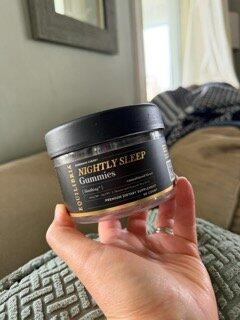
If you're combining with CBD Nightly Sleep Gummies, take them as you step out of the bath — the 30–60 minute onset window aligns with the thermoregulatory drop, so both are working in the same direction at the same time.*
The pre-sleep bath is one of the few sleep interventions that is simultaneously free, evidence-backed, pleasurable, and synergistic with everything else you're doing to support your nervous system. It doesn't require a supplement protocol. But it makes one work better.
Frequently Asked Questions
Does a warm bath before bed actually help you sleep? Yes — this is one of the better-supported sleep interventions in the research literature. A 2019 meta-analysis in Sleep Medicine Reviews analyzed 13 studies and found that a warm bath or shower at 40–42.5°C taken 60–90 minutes before bed reduced sleep onset latency by an average of 10 minutes and improved sleep quality ratings. The mechanism is thermoregulatory: hot water immersion triggers vasodilation, which drives heat from the body's core to the skin's surface. When you exit the bath, core temperature drops rapidly — signaling the brain to initiate melatonin release and sleep onset.
What temperature should a bath be for sleep? The research-supported average is 40°C (104°F). This is warm enough to drive meaningful vasodilation and core temperature dissipation, but not so hot that it becomes physiologically stressful. The goal is the post-bath temperature drop — not the heat itself — so temperature precision matters more than duration.
How long before bed should I take a bath for sleep? 60 to 90 minutes before your intended sleep time is the evidence-supported window. This timing allows the post-bath core body temperature drop to align with natural circadian cooling and melatonin onset, rather than occurring too early or too late to make a difference. A 20–30 minute bath duration is sufficient.
What does core body temperature have to do with sleep? Core body temperature follows a circadian rhythm — rising during the day and dropping in the evening. That drop of approximately 1–1.5°C is a biological sleep trigger: it signals the brain to release melatonin and initiates the transition into slow-wave sleep. Under chronic stress, elevated cortisol and sympathetic nervous system activation blunt this natural drop, delaying sleep onset and reducing slow-wave sleep quality. A pre-sleep warm bath artificially accelerates the drop through vasodilation.
What is a magnesium bath good for? Transdermal magnesium absorption during bathing may support GABA receptor function and muscle relaxation — complementing the thermoregulatory effects of the warm water itself.* While transdermal absorption is less efficient than oral supplementation, research suggests meaningful uptake occurs during skin immersion, particularly in magnesium-depleted individuals. A magnesium mineral soak creates a dual-action recovery effect: thermal priming for sleep onset plus mineral support for muscular and neurological relaxation.