
Your Nervous System on Vacation: What Travel Actually Does to Your Body
Travel is sold as rest. But come home after a trip — or even from just a few days away — and you'll often find something that doesn't match the brochure: drained rather than restored, wired rather than calm, maybe the worst sleep you've had all month. The first instinct is to blame yourself. You didn't relax properly. You didn't pace yourself. You were too anxious to enjoy it.
There's a more accurate explanation. Your nervous system was doing exactly what it evolved to do in unfamiliar, unpredictable environments — and that process is expensive. Understanding what's actually happening makes it easier to support rather than fight.
Key Takeaways
- Travel is a genuine physiological stressor — airports, transit, and schedule disruption activate the HPA axis even when the experience isn't consciously stressful
- Sleeping in an unfamiliar environment triggers the "first night effect": the brain keeps one hemisphere on lighter alert, producing measurably less restorative sleep
- Trans-meridian travel disrupts the cortisol circadian rhythm, with HPA dysregulation measurable for several days after arrival
- Nervous system support while traveling means sustaining ECS tone and minimizing unnecessary HPA activation — not sedation
- The most practical travel protocol: fast-acting sublingual CBD in transit, consistent evening ECS support at the destination, magnesium glycinate for sleep in unfamiliar environments
Travel Doesn't Begin Where You Think It Does
The stress response doesn't wait for the delayed flight or the lost luggage. It starts earlier — at the terminal, in the security line, in the hour before you leave home when you're running through your checklist and refreshing the airline app.
Traveling, especially through airports, include sensory environments designed for throughput, not nervous system regulation. Each element presses on the body's vigilance system:
- Sustained, unpredictable noise that's impossible to tune out
- Dense, shifting crowds with no personal space buffer
- Variable artificial lighting that carries no circadian signal
- Schedule pressure and the low-grade threat of missing a connection
- Loss of environmental control — none of the predictable inputs the nervous system uses for baseline regulation are available
Research on chronic aircraft noise exposure found measurable HPA axis effects: elevated evening cortisol, a flattened diurnal cortisol curve, and disrupted sleep architecture. [1] The mechanism is direct: environmental noise → sympathetic nervous system activation → HPA axis → cortisol. You don't have to find the experience consciously stressful to have a cortisol response to it.
This matters because it reframes what travel fatigue is. It's not weakness, low fitness, or a failure to stay relaxed. It's a real, measurable physiological load — the same system that responds to any perceived threat or unpredictability, whether or not you're aware of it as threatening. Naming it accurately is the first step to supporting it well.
Why You Sleep Worse the First Night Away
Arrive at the hotel, get into bed, lie awake. You're tired. The room is dark. Nothing is wrong — and yet sleep doesn't come easily. If this sounds familiar, you've experienced the first night effect, and there's a specific neurological reason it happens.
Research published in Current Biology found that when humans sleep somewhere unfamiliar, the brain doesn't power down evenly. Instead:
- The left hemisphere maintains significantly lighter sleep — less slow-wave activity, more responsiveness to novel sounds
- The right hemisphere sleeps more normally
- The lighter hemisphere acts as an internal night watch, scanning for unexpected input and ready to trigger arousal faster than it would in a known environment
The asymmetry disappears on the second night in the same space — once the brain has enough data to register the environment as safe. [2]
This is the nervous system working correctly. But it means the first night of a trip is almost never the most restorative sleep of the trip — regardless of how tired you were when you arrived, how quiet the room is, or how good the blackout curtains are.
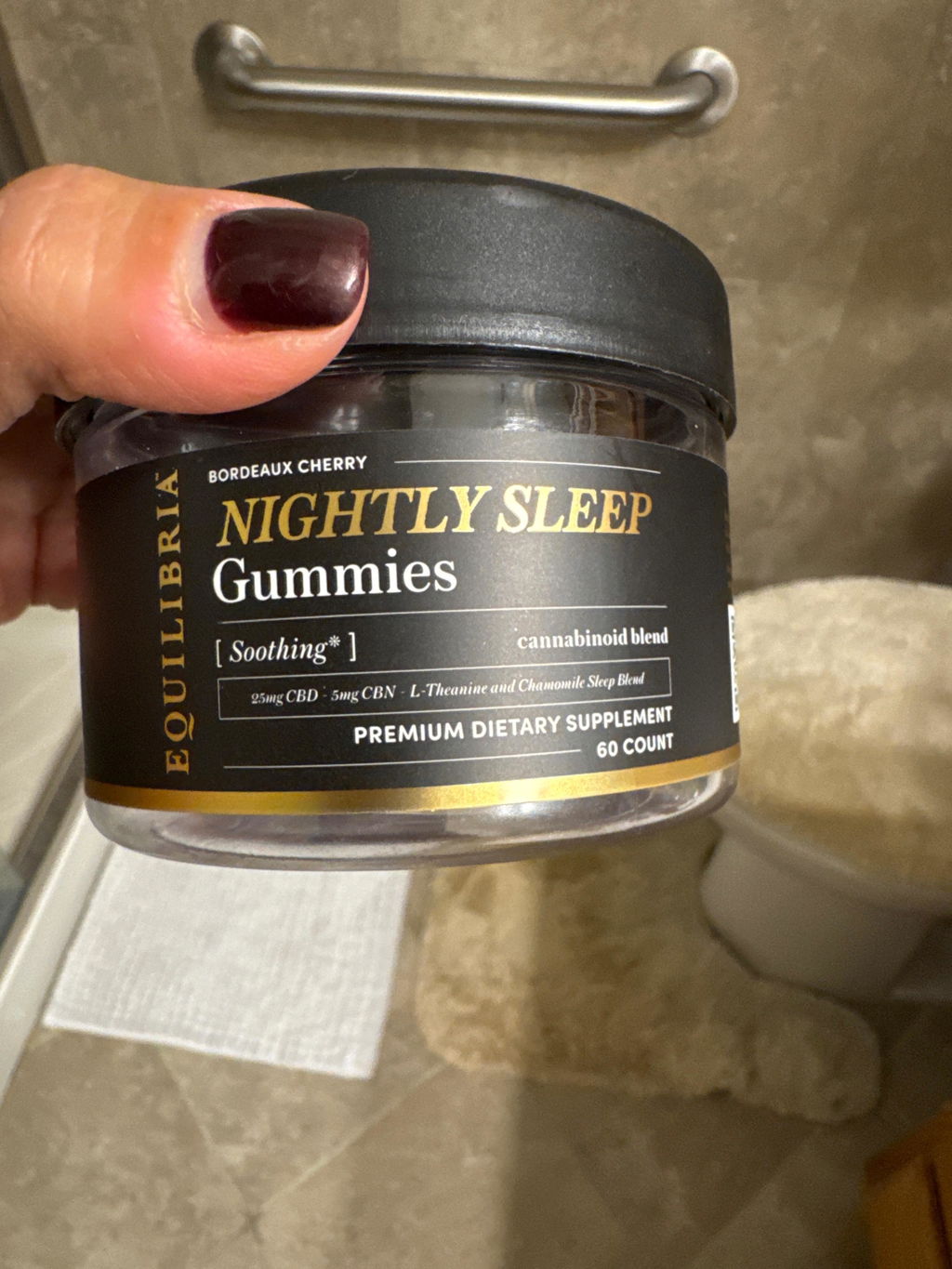
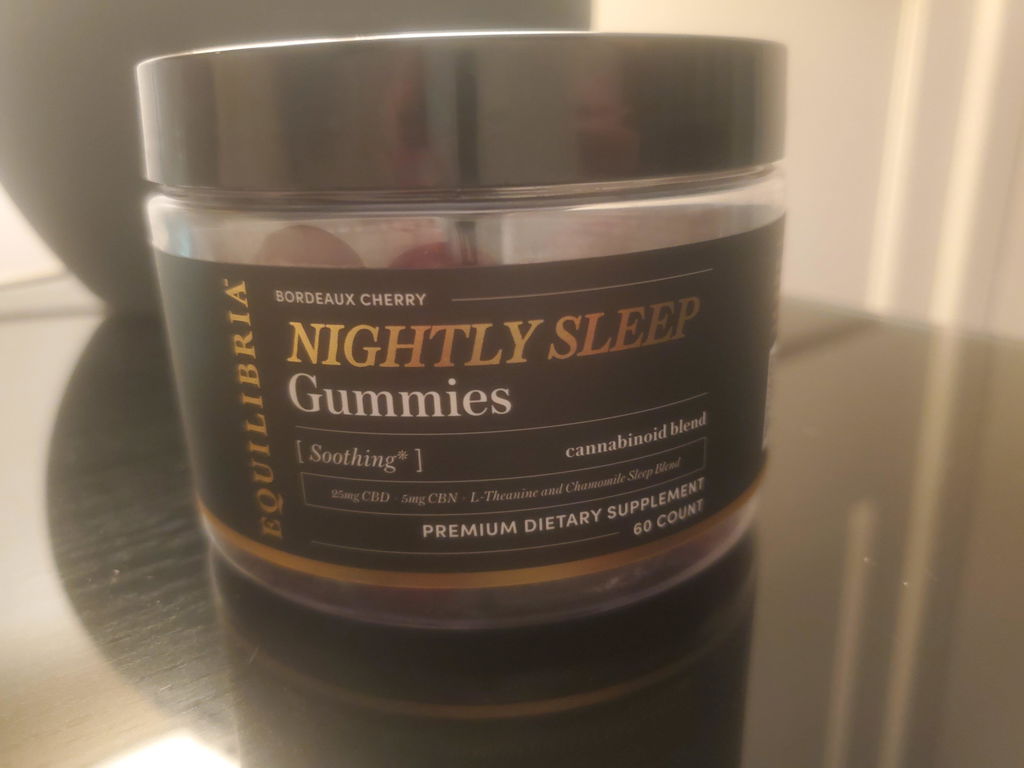
Supporting the evening transition with consistent ECS tone may help the nervous system settle into an unfamiliar sleep environment more readily. CBD Nightly Sleep Gummies — which combine CBD and CBN — address two distinct layers of this: CBD's role in ECS sleep-wake regulation, and CBN's emerging evidence for sleep continuity. [3] Paired with Deep Sleep Magnesium*, which supports GABA receptor function and muscle relaxation, the evening protocol addresses what you can actually influence when the nervous system is still on alert.
Jet Lag Is a Cortisol Problem, Not Just a Timing Problem
Time zone changes get framed primarily as scheduling inconveniences. The biological reality is more specific.
The cortisol circadian rhythm is one of the most tightly regulated patterns in the body — and one of the first things trans-meridian travel disrupts:
- Morning: Cortisol peaks 30–45 minutes after waking, driving alertness
- Through the day: It declines steadily, governing energy and mood regulation
- Night: It reaches its lowest point in early sleep, allowing the body to wind down
This cycle is calibrated to the local light-dark cycle. When that signal shifts by five or eight hours overnight, the HPA axis takes days to catch up.
Research tracking salivary cortisol in eastward travelers before and after their flights found the diurnal pattern measurably disrupted post-travel — cortisol no longer tracked with the new local light-dark cycle in the days following the trip. [4] A 2024 systematic review on travel and circadian disruption confirmed that trans-meridian travel impairs the HPA axis's coupling to local time, with downstream effects on metabolism, sleep architecture, mood, and cognition that extend well beyond the timing mismatch itself. [5]
What this means practically: the nervous system load doesn't end when you land. The recovery window runs for several days — and supporting consistent ECS tone and the sleep-wake transition during that window is the same logic as any other approach to circadian realignment. CBD Daily Drops taken consistently at the new local evening time (not your home time zone) is a small anchor that costs very little to maintain and supports the systems doing the recalibration work.
What Nervous System Support During Travel Actually Means
It's not sedation. Taking something that knocks you out for a flight doesn't reset your cortisol rhythm or signal to your brain that the hotel room is safe.
Real nervous system support during travel means two things: minimizing unnecessary HPA activation in the moments when it's most easily triggered, and sustaining the ECS tone that helps the body return to baseline more efficiently.
In transit: Rapid Calming Melts* are the format built for this context — sublingual, fast onset (15–30 minutes), no water required, compact. They're designed for exactly the kind of acute, variable stress load that transit produces: the boarding delay, the crowded connection gate, the pre-travel nervous anticipation. One is enough. The goal isn't to feel sedated on the plane — it's to avoid arriving at your destination having spent four hours in low-grade sympathetic activation.
At the destination: The evening protocol does the most consistent work. CBD Daily Drops or CBD Nightly Sleep Gummies 30 to 60 minutes before bed as an ECS reset. Deep Sleep Magnesium* in the same window. These aren't new products for travel — they're your normal evening routine, continued. Consistency is the whole point.
For the post-trip window: This is where people most commonly drop their routine. You're home, exhausted but relieved, and it feels like the trip is over. Cortisol rhythm disruption can persist for several days after return — the recovery window is real. Continuing your morning and evening CBD routine for at least 3 to 4 days post-travel supports the systems still doing the recalibration work.*
A Practical Travel Protocol
Before departure: Keep your CBD routine consistent in the days leading up to the trip. The ECS benefits from steady baseline support, and disrupting it right before travel removes the buffer you'll want most.
In transit: One Rapid Calming Melt when the sensory environment starts to register — the airport, the boarding gate, the first sign of a delay. Not as a prophylactic for the entire trip, but as a response to the acute load when it arrives.
First night: CBD Nightly Sleep Gummies + Deep Sleep Magnesium 30 to 45 minutes before bed. Carry both in your personal item, not checked luggage.
Mornings at the destination: CBD Daily Drops with breakfast at the new local time, not your home time zone. You're anchoring to the new circadian signal.
Post-return: Same morning and evening routine for at least 3 to 4 days. The work of recovery continues after you're back in your own bed.
The goal isn't to avoid feeling like you're traveling. It's to give your nervous system the support to do the work of adjusting — which it will, reliably, if you're not constantly overriding it.*
Frequently Asked Questions
Why does traveling make me so tired even when I'm excited about the trip?
Excitement doesn't prevent the HPA axis from activating in response to sensory overload, schedule disruption, and unpredictability. The nervous system doesn't distinguish between "good" stimulation and threat in terms of cortisol output — both require activation and recovery. Anticipation of a trip can also increase pre-sleep arousal in the days before departure, adding to cumulative depletion by the time travel itself begins.*
Does CBD actually help with jet lag?
CBD doesn't reset the circadian clock or prevent jet lag. What consistent CBD use may support is the ECS's role in sleep-wake regulation and cortisol modulation — both of which are disrupted by trans-meridian travel. The more accurate frame is that it supports the systems your body uses to recalibrate, rather than shortcutting the recalibration itself.*
Why do I sleep worse on the first night of a trip even when I'm exhausted?
This is the first night effect — a documented neurological response where the brain maintains asymmetric hemispheric activity on the first night in an unfamiliar environment. One hemisphere stays in lighter sleep to monitor novel sounds; the other sleeps more normally. The asymmetry typically resolves on the second night in the same space.*
Is it safe to travel with CBD products?
Hemp-derived CBD products that comply with federal regulations (≤0.3% THC) are generally legal to travel with within the United States. For international travel, regulations vary significantly by country — always verify local law before traveling internationally with any supplement or cannabinoid product.*
What's the difference between travel fatigue and jet lag?
Jet lag is specifically the circadian disruption caused by crossing multiple time zones — the HPA axis and sleep-wake system are out of sync with the local light-dark cycle. Travel fatigue is broader: the combined effects of sensory load, HPA activation, disrupted sleep, dehydration, and schedule disruption that occur with any travel, including same-time-zone trips. You can experience significant travel fatigue without crossing a single time zone.*