

May tends to ask a lot of women. It's a month that celebrates the ones who show up — for their children, their parents, their communities — and holds space, however quietly, for the weight that showing up can carry. This is the time of year we honor caregivers in their many forms. It's also a month when the conversation around mental and emotional health gets a little louder.
What doesn't always get said in either conversation is what the body is actually doing while you carry all of it.
Key Takeaways:
- Caregiver stress is physiological, not just emotional. Sustained caregiving keeps the autonomic nervous system in chronic fight-or-flight mode, elevating cortisol and suppressing immune function over time.
- The nervous system doesn't reset on its own. Once sensitized by chronic stress, it becomes more reactive and slower to recover — which is why rest alone isn't enough.
- Active recovery is required. Breathwork, GABA-supporting nutrition, magnesium, L-theanine, and ashwagandha all signal safety to a system stuck in threat mode.
- Sleep is nervous system infrastructure, not a reward. Disrupted sleep prevents cortisol processing and emotional memory consolidation — compounding every other symptom.
- The endocannabinoid system (ECS) plays a central role in stress regulation. Full-spectrum CBD supports the ECS to help modulate mood, stress response, and sleep from a systemic level.
There is a version of strength that looks like endurance — the friend who's been driving someone to chemo every Thursday, the daughter managing a parent's medications from across town, the partner who absorbs the weight of another person's illness with steadiness and mostly without credit. Caregiving doesn't announce itself as a stressor. It expands gradually, fills the edges of your life, and trains your nervous system to stay in a state of readiness — indefinitely. And while the world tends to celebrate the grace and endurance of that, what rarely gets discussed is what that sustained state does to your biology over time.
At Equilibria, our mission has always been to support women through the full complexity of what they carry. If you're a caregiver — in any form, at any scale — that complexity deserves more than the usual conversation about self-care. It deserves the science.
What Does Chronic Caregiving Do to Your Body?
The autonomic nervous system (ANS) is the control center for your body's involuntary functions: heart rate, breath, digestion, sleep, immune response. It operates in two modes — the sympathetic "fight-or-flight" state and the parasympathetic "rest-and-digest" state. Healthy nervous system function means moving fluidly between both.
Sustained caregiving keeps the nervous system locked in sympathetic overdrive. The demands are unpredictable. The emotional weight is relentless. The breaks are insufficient or nonexistent. And while the mind learns to adapt — to push through, to stay functional — the body is running a different calculation.
Chronic sympathetic activation leads to persistently elevated cortisol. Research consistently indicates this disrupts sleep architecture, heightens anxiety sensitivity, suppresses immune function, and accelerates physiological aging at the cellular level. Studies on long-term caregivers show measurably altered stress hormone profiles and immune function compared to non-caregiving peers — including younger caregivers who appear otherwise healthy.
According to the Cleveland Clinic, caregiver burnout — defined as a state of physical, emotional, and mental exhaustion from prolonged caregiving demands — affects more than 60% of caregivers. And yet the condition is so normalized that most people can't identify the moment it began. Only that they feel depleted in a way that sleep alone doesn't fix.
That's because this isn't about sleep debt. It's about nervous system debt.
Why Rest Alone Doesn't Fix Caregiver Burnout
Here's what the research tells us about nervous system dysregulation: once the ANS has been running in chronic stress mode, it doesn't automatically reset when the stressor is temporarily removed. The system becomes sensitized — more reactive to perceived threat, slower to return to baseline.
This is why a quiet Sunday afternoon can still feel tense. Why you wake up already braced for the day. Why the moment caregiving pauses, you don't feel relief — you feel anxiety about when it will start again.
This is not a character flaw. It's physiology. And it means that recovery requires more than the absence of stress. It requires active, intentional nervous system regulation.
How to Actually Recover From Caregiver Stress
Effective stress recovery for caregivers isn't about grand gestures. It's about consistency — small, repeated inputs that signal safety to a nervous system that has been in threat mode for too long.
1. Regulate before you escalate. Rather than waiting until you're in crisis, build regulation into your daily baseline. Research on mindfulness-based stress reduction (MBSR) shows that regular practice changes interoceptive awareness — your ability to read your body's internal signals — which is directly linked to improved emotional regulation. Ten minutes of intentional breathwork, a slow walk, a brief body scan: these aren't indulgences. They're system resets.
2. Support your neurochemistry. Your nervous system relies on specific neurotransmitters — GABA, serotonin, dopamine — to modulate between arousal and calm. Chronic stress depletes these resources. Evidence-based support includes magnesium (which supports GABA activity and is depleted by cortisol), L-theanine (which promotes alpha brain wave activity and quiet alertness), and full-spectrum CBD, which interacts with the endocannabinoid system and may help support the body's overall stress response.
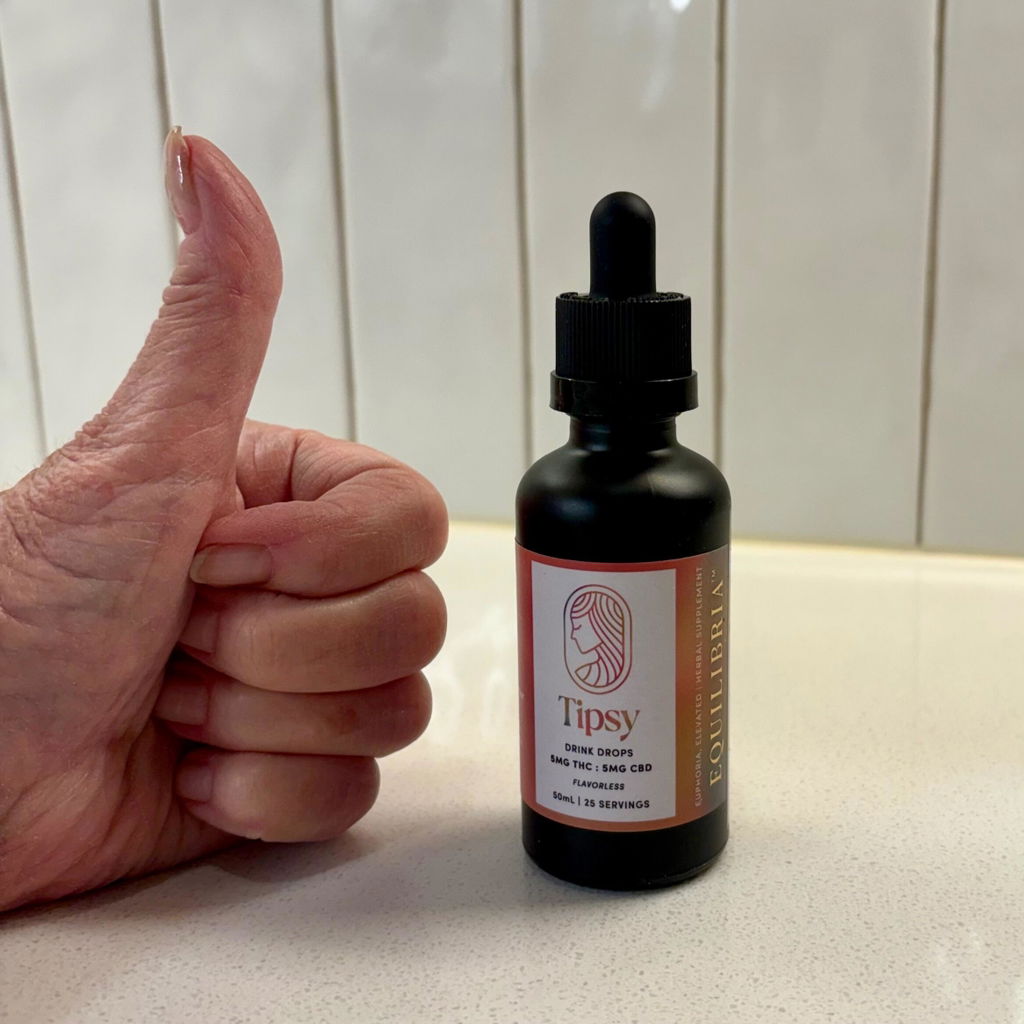
Equilibria's CBD formulations — including the CBD Rapid Calming Melts for acute stress moments and the CBD Daily Drops for consistent baseline support — are formulated with the female nervous system in mind, designed to integrate into a daily routine rather than serve as a last resort.
3. Protect sleep as infrastructure, not reward. Sleep is when the nervous system processes the day's stress load and consolidates emotional memory. Disrupting it compounds every other symptom. If you're not sleeping through the night, that's not a minor inconvenience — it's a signal that your system doesn't feel safe enough to fully downregulate. Formulations combining CBD with sleep-supportive ingredients like CBN and L-theanine, as found in Equilibria's Nightly Sleep Gummies, may support the transition from wired to rested without the morning grogginess some experience with conventional sleep aids.
4. Reframe recovery as your job, not your reward. The cultural narrative around caregiver self-care positions rest as something you earn after the work is done. The science says otherwise. Recovery is what makes sustained caregiving physiologically possible. If you don't regulate your nervous system, you will eventually reach a threshold where the body forces the issue — through illness, through emotional shutdown, through a crash that sidelines you in ways that don't serve anyone.
You cannot pour from a depleted system. That's not metaphor. That's biology.
When to Get Personalized Support for Caregiver Burnout
Equilibria's 1:1 wellness coaching is designed for exactly this kind of complex, layered situation — where the goal isn't a quick fix, but building a sustainable protocol that fits the reality of your life and your body. If you're a caregiver navigating chronic stress and you're not sure where to start, our Certified Wellness Coaches are here to help you build a routine grounded in science and personal to you.
You've been taking care of everyone else. It's time to get serious about what it takes to keep you functioning — not just surviving.
Frequently Asked Questions
What does caregiver stress actually do to your body?
Chronic caregiving keeps the autonomic nervous system in sympathetic overdrive — meaning elevated cortisol, suppressed immune function, disrupted sleep architecture, and heightened anxiety sensitivity. Over time, these aren't just symptoms of feeling stressed; they are measurable physiological changes documented in peer-reviewed research on long-term caregivers.
Why do I still feel anxious and depleted even when I finally get a break?
Because the nervous system doesn't automatically reset when the stressor is removed. Chronic stress sensitizes the ANS — making it more reactive to perceived threats and slower to return to baseline. This is why a quiet afternoon can still feel tense, and why rest without active nervous system regulation rarely produces full recovery.
How common is caregiver burnout?
More than 60% of caregivers experience caregiver burnout — defined by the Cleveland Clinic as a state of physical, emotional, and mental exhaustion from prolonged caregiving demands. Most people cannot identify when it began, only that the depletion feels different from ordinary tiredness.
What supplements actually help with caregiver stress?
The most evidence-supported options for chronic stress recovery include: magnesium glycinate (supports GABA receptor function, depleted by cortisol), ashwagandha (modulates the HPA axis and cortisol over 8–12 weeks of consistent use), L-theanine (promotes alpha brain wave activity and calm focus within 30–45 minutes), and full-spectrum CBD (supports the endocannabinoid system's role in stress, mood, and sleep regulation).
Does CBD help with caregiver stress and sleep?
Full-spectrum CBD interacts with the endocannabinoid system — a regulatory network that governs stress response, mood, inflammation, and sleep. It doesn't replace the need for sleep hygiene or nutritional support, but as one layer in a complete protocol, it can meaningfully support the body's ability to modulate its own stress response and transition into restorative sleep.