January has a way of making us pause and look honestly at our habits. Whether you've committed to a full Dry January or you're simply trying to cut back at any point in the year, the question that comes up for most people is the same: what do I do instead?
Often, that question isn't really about alcohol. It's about the moment — the wind-down ritual, the signal to your nervous system that the day is over, the way a glass of wine helps you transition from "go mode" to rest. The habit isn't arbitrary; it's filling a real need. Replacing it requires something that fills the same space.
What CBD Actually Replaces
CBD doesn't create a buzz or a high. What it may do — when used consistently and built into an intentional routine — is support the nervous system in winding down. For many people, that looks like a quieter mind in the evenings, a softer transition into sleep, and less reactivity to the kind of stress that builds throughout the day.
Those are the same gaps alcohol often fills — at least in the short term. The key difference is what happens afterward. Unlike alcohol, CBD isn't associated with disrupted sleep architecture, morning grogginess, or a rebound in anxiety the next day. If you want to understand exactly why — the mechanisms are genuinely interesting — our THC vs. Alcohol science breakdown gets into the neuroscience without oversimplifying it.
Building the Ritual
Part of what makes nightly drinking hard to step away from is the ritual itself — the pour, the pause, the intentional act of marking a transition. CBD works best when it's built into that same structure.
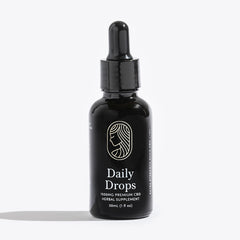
For a slow evening wind-down: Daily Drops taken sublingually about 30 minutes before you'd normally pour a drink give your nervous system a gradual ease into the evening. Hold under your tongue for a full 60 seconds for best absorption. Within 15–30 minutes, many people notice a gentle quieting — a shift in the mental noise that can make the first drink feel necessary.
For a harder decompression moment — a stress spike, a difficult day, anxiety that isn't coming down — Rapid Calming Melts are designed for faster-acting support. They absorb at up to ~95% bioavailability and kick in in as little as 5–10 minutes. One Melt placed under the tongue at the moment you'd otherwise reach for a drink can interrupt the pattern in real time.
What to Expect in the First Two Weeks
CBD isn't a quick fix in the way alcohol can feel like one. It works best as a consistent daily practice. During Dry January or any intentional break from drinking:
The first few days can feel restless. Your nervous system is used to a specific kind of input at a specific time — give it space to recalibrate.
By days 5–7, if you're taking CBD consistently and pairing it with an intentional evening routine, most people find it's become its own ritual — and the pull toward the drink softens naturally.
Weeks 2–3 is when the compounding effect of consistent CBD tends to show up most clearly: improved sleep quality, a lower baseline stress level, and a general sense of steadiness that doesn't come with a next-day cost.
A Certified Wellness Coach can help you dial in timing and dose if you want a personalized starting point — it's included with any Equilibria purchase.
If You're Using This as a Starting Point
Dry January is a gateway — and "beyond" is the real opportunity. Whether you go alcohol-free long-term or simply become more intentional about when and why you drink, CBD can be part of the infrastructure that makes that shift easier and more sustainable.
For a deeper look at what's actually happening in your body when you drink versus use THC — the neurotransmitter pathways, what alcohol does to your sleep stages, and why it so reliably wakes you up at 3AM — read THC vs. Alcohol: What the Science Says.
Frequently Asked Questions
Can CBD replace alcohol for stress relief?
CBD may support stress relief through a different mechanism than alcohol — rather than sedating the nervous system, it may help regulate it. For people using alcohol primarily to unwind at the end of the day, CBD taken sublingually (like Daily Drops or Rapid Calming Melts) may provide a similar sense of ease without the sleep disruption or morning rebound that alcohol often causes. Results vary by individual and dose.
How do I use CBD as an evening wind-down ritual?
The most effective approach is to pair your CBD with a consistent time and routine — not just take it reactively. Daily Drops taken sublingually about 30 minutes before you'd typically unwind, held under the tongue for 60 seconds, may support a gradual wind-down. For more immediate stress support, Rapid Calming Melts offer faster onset (5–10 minutes) and are well-suited for higher-stress evenings.
Is it safe to use CBD every day as an alcohol alternative?
CBD is generally considered safe for daily use, and consistent daily use is actually how it tends to work best — effects are more noticeable over time than from a single dose. That said, if you're on any medications or have underlying health conditions, it's worth checking in with your healthcare provider before starting. Equilibria's Certified Wellness Coaches are also available for guidance on building a sustainable routine.
How long does it take for CBD to work as an alcohol alternative?
The acute effects of a sublingual dose (Daily Drops or Rapid Calming Melts) are typically felt within 15–30 minutes. The deeper, compounding effects — the kind that make the pull toward alcohol feel less strong — tend to emerge after 2–3 weeks of consistent daily use. Most people notice meaningful shifts in sleep quality and stress baseline within the first two to three weeks.
What's the difference between Daily Drops and Rapid Calming Melts for evening support?
Daily Drops are your flexible daily baseline product — taken sublingually, they kick in in 15–30 minutes and offer support for 4–6 hours. Rapid Calming Melts are a faster-acting, higher-bioavailability option (~95%) designed for in-the-moment support, with onset as quickly as 5–10 minutes. For evenings, many people use both: Drops as part of a consistent daily routine, and a Melt as a targeted booster on harder days.