
Here's the honest, science-forward version of a comparison that usually gets flattened into lifestyle talking points: how you feel after drinking versus using THC isn't random — it's mechanism. What follows is what's actually happening inside your body. How each compound interacts with your brain, what your liver does with them, and why one reliably wakes you up at 3AM. The biology makes the distinction clear, and understanding it once changes how you make choices.
Key Takeaways
- Alcohol works by amplifying GABA and suppressing glutamate, producing sedation that rebounds into excitation as blood alcohol clears — which is why it disrupts sleep in the second half of the night.
- THC works through the endocannabinoid system, binding to CB1 receptors in a dose-dependent way rather than broadly suppressing neural activity.
- Alcohol metabolism produces acetaldehyde, a toxic intermediate linked to next-day symptoms; THC metabolism produces 11-OH-THC, an active but non-toxic metabolite.
- Low-dose THC may offer more predictability than alcohol for people exploring alternatives to wind down — but dose, individual variation, and product format all matter.
- CBD appears to attenuate some of THC's less comfortable effects, including anxiety, at low-to-moderate doses — which is why combination products are formulated the way they are.
How Does Alcohol Actually Work in the Brain?
When you drink, alcohol doesn't latch onto one receptor type — it broadly changes how neurons communicate. Its two primary targets are GABA-A receptors (which inhibit neural activity) and NMDA receptors (which drive excitatory signaling). Alcohol potentiates GABA-A and simultaneously suppresses NMDA receptor activity. The result: a system-wide shift toward inhibition, which is why a glass of wine creates that familiar loosening of tension — shoulders drop, the mental chatter quiets, the low-grade friction of the day softens. That's GABA briefly tipping toward calm.
The problem is what happens when the wine wears off. When the GABA-amplifying, glutamate-suppressing effect clears, the brain compensates with a rebound surge of glutamate — the same excitatory neurotransmitter that was being suppressed. This rebound is the mechanism behind the 3AM wake-up: blood alcohol has cleared, the sedation lifts, and you're left with a brief but real state of neural overactivation. You didn't just wake up thirsty — your brain overcorrected. (We went deeper on this in our post on why alcohol disrupts sleep in the second half of the night.)
How Does THC Work Differently?
THC takes a different path entirely. Rather than acting as a blunt chemical sedative, it's a partial agonist at CB1 receptors — receptors distributed throughout the brain and nervous system that are part of the endocannabinoid system (ECS), your body's built-in regulatory network.
The ECS doesn't have a single switch. CB1 receptor activation in different brain regions produces different effects — and at different doses, THC's effects change significantly. At low doses, THC is associated with reduced anxiety and mild euphoria. At higher doses, the same mechanism can tip toward anxiogenic effects, increased heart rate, and cognitive impairment. This biphasic dose-response is critical to understand — and it's the part that surprises people most. A low-dose gummy on a quiet Sunday evening at home might feel grounding and calm. That exact same dose in a crowded party when you're already anxious can tip in the opposite direction. Same milligrams, different outcome — because your baseline nervous system state, your environment, and your experience with cannabis all shape how CB1 activation lands. Alcohol, with its blunter mechanism, doesn't shift that dramatically based on context.
There's also a meaningful difference in how cannabis affects the glutamate system. Where alcohol causes a surge of glutamate rebound when it clears, the available evidence suggests cannabinoids modulate glutamate more selectively and without the same withdrawal-related excitatory surge — though research is still developing here.
What Happens to Memory and Cognition With Each?
Alcohol impairs memory encoding acutely. You know how the first hour of a big night out tends to stay clear, but the last hour can be a gap? That's not just being tired. It disrupts hippocampal consolidation at moderate-to-high doses — which is why events don't just get blurry, they become genuinely unrecorded. The brain stopped saving. Next-day cognitive function is also affected, even without a classic hangover, due to disrupted sleep architecture and the effects of acetaldehyde on cellular processes.
THC also affects memory encoding at higher doses — but the experience is different. With alcohol, the recording just stops. With higher-dose THC, you can feel fully present in a moment, often acutely aware of what's happening, but the "save" function becomes unreliable. CB1 receptor-dense regions of the brain include the hippocampus, and at low doses this effect is generally mild. At higher doses — or in people newer to cannabis — it can be more pronounced.
The honest summary: both compounds affect memory. The degree, duration, and mechanism differ by dose, format, individual tolerance, and co-use with other substances.
What's the Difference in How Your Body Metabolizes Each?
This is where the two diverge most clearly at the molecular level.
Alcohol metabolism runs through a two-step enzymatic process: ethanol → acetaldehyde (via alcohol dehydrogenase) → acetic acid. The intermediate, acetaldehyde, is genuinely toxic. It damages DNA, disrupts mitochondrial function, and is considered the primary driver of hangover symptoms and longer-term alcohol-related harm. That pounding headache and low-grade nausea the morning after? Much of it is acetaldehyde — a toxic byproduct your body has to fully clear before you feel like yourself again.
THC metabolism is hepatic but follows a different route: CYP3A4 and CYP2C9 enzymes convert THC primarily into 11-OH-THC (an active metabolite) and then into THC-COOH (inactive). 11-OH-THC is pharmacologically active — it crosses the blood-brain barrier and contributes to the experience — but it does not carry the same documented toxicity profile as acetaldehyde. This is part of why edibles and oral formats can hit harder and later than expected: first-pass liver metabolism converts more THC to 11-OH-THC than inhalation does. The most common edible mistake: you take one, feel nothing after 45 minutes, assume it didn't work, and take another — then both arrive together. The delayed train was always coming; the problem was boarding a second one before the first arrived.
There is no THC equivalent to acetaldehyde. That doesn't mean THC is risk-free — it means the metabolic comparison is mechanistically distinct.
Is Low-Dose THC a Reasonable Alternative to Alcohol?
For people who are sober-curious, California sober, or simply looking to wind down without alcohol, this is the real question. The research doesn't yet have a clean head-to-head comparative trial to point to — this is partly a product of the regulatory environment that has long restricted controlled cannabis research, not a lack of interest. What exists is strong mechanistic evidence, growing observational data, and real-world functional studies actively underway. Research like what's being tracked here through moreBetter reflects the kind of real-world observation and data collection that will continue filling in this picture — and it's worth watching. What the current evidence does make clear is that these two compounds are pharmacologically distinct in ways that matter.
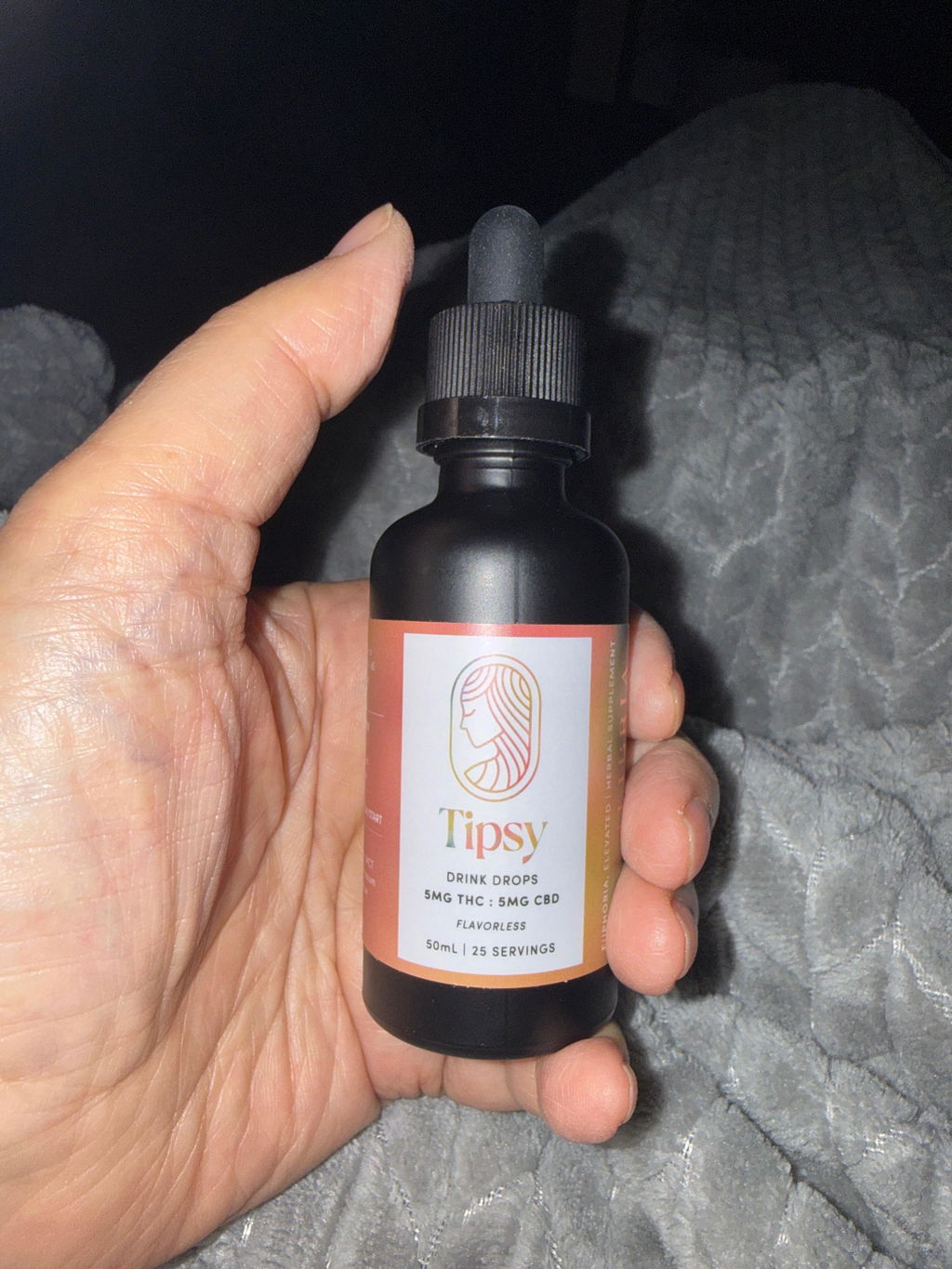
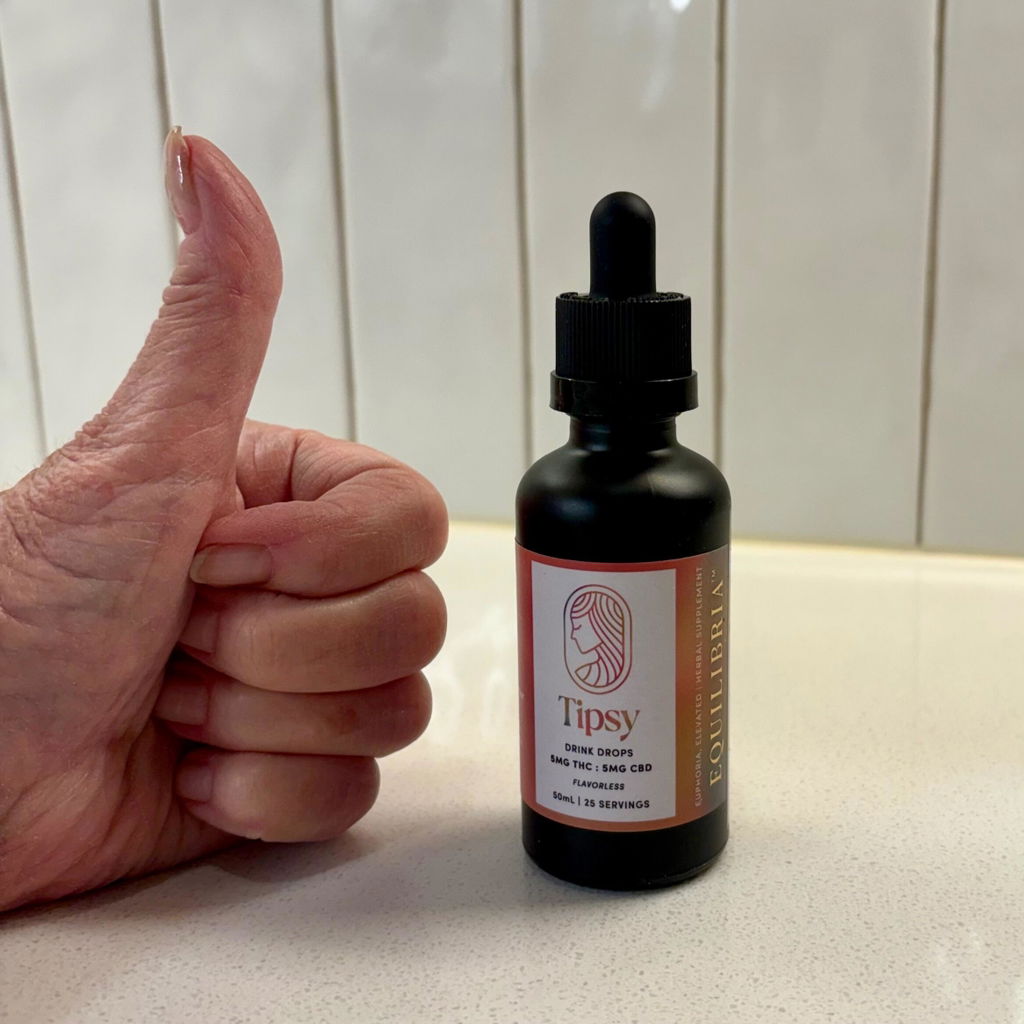
Tipsy THC Drink Drops + Tipsy Drink Snaps
For those who want to swap the drink ritual — not just the buzz — Tipsy is designed for exactly that.
- Dose: 5mg THC + 5mg CBD — a balanced 1:1 ratio that keeps the experience grounded and functional, with the CBD helping widen the comfort window
- Onset/Duration: As a water-soluble format, Drink Drops can begin working in as little as 15–30 minutes — significantly faster than a metabolized gummy. Sipping lets you pace yourself and feel effects in real time, giving you a level of control a pre-dosed gummy doesn't offer. Effects typically last 2–4 hours
- Format: Drink Drops come in a flexible dropper bottle you add to any beverage (adjust the amount as needed); Drink Snaps are pre-dosed single-serve packets — just pour into water or sparkling water, ideal for social settings or on the go
- Best for: Daytime social, creative work, active recovery, light unwinding — presence without sedation
- Pro-tip: The 1:1 CBD-to-THC ratio is one of the most forgiving starting points for new users; the CBD presence helps balance the experience even as you find your dose
Ellevate Gummies in Peach Mango
For a gentler, more relaxed experience — the kind that's less about staying functional and more about fully letting go — Ellevate is formulated at a lower THC dose with a higher CBD ratio.
- Dose: 2.5mg THC + 5mg CBD — the lower THC makes this the better starting point for cannabis newcomers, or anyone who's had a less comfortable experience with THC before
- Onset/Duration: 45–90 minutes; effects tend to feel more body-forward, sustained, and relaxed than Tipsy's more balanced profile
- Best for: Before yoga, a spa day, a slow evening, or winding down for bed — when the goal is full release rather than functionality
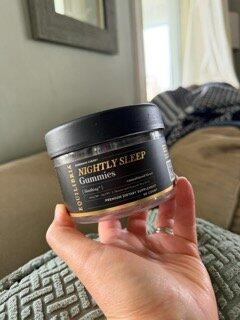
- Pro-tip: Ellevate pairs well with Nightly Sleep Gummies (12.5mg CBD + 2.5mg CBN) for deeper sleep support — the Ellevate eases you toward rest, the sleep gummy handles the overnight architecture
One important note: THC is not appropriate for everyone. This includes people who are pregnant or breastfeeding, under 21, or anyone who must avoid intoxicants for medical, professional, or personal reasons. Start low, go slow — especially with edibles, where the delayed onset from 11-OH-THC conversion can lead to overconsumption before effects are felt.
If you're exploring THC as a genuine alcohol alternative — or building a low-dose daily wellness routine that actually supports your biology rather than working against it — our Certified Dosage Specialists offer one-on-one guidance for exactly this. Book a 1:1 Dosage Support session for personalized help with format, dose, and timing for your specific goals.
If you're new to the ECS and want foundational context before exploring THC products, this explainer on how the endocannabinoid system works is a good place to start.
The science on cannabis is still developing. But what we do have is enough to say: these two compounds are not interchangeable, and understanding the mechanism matters more than choosing based on social habit.
Frequently Asked Questions
Why does alcohol disrupt sleep even when it helps you fall asleep?
Alcohol is actually a sedative — it quiets your nervous system by amplifying the brain's natural calming signal (GABA) and suppressing the excitatory one (glutamate). That's why it helps you fall asleep. The problem is your brain doesn't stay in that state. As the alcohol clears, it rebounds by flooding the system with the excitatory signal it was suppressing. That rebound is what wakes you up at 3AM — your body isn't broken, your brain just overcorrected. The sedation was real. So is the payback.
Is low-dose THC a viable alcohol alternative for anxiety relief?
It can be — but THC has what researchers call a biphasic dose-response for anxiety, meaning it works very differently at different doses. At low doses, THC is associated with calm and reduced anxiety. At higher doses, the same mechanism can flip and actually increase anxiety, heart rate, and mental hyperawareness. Think of it as a dial rather than a switch — there's a sweet spot, and it's different for everyone. Products like Ellevate (2.5mg THC + 5mg CBD) are formulated at the lower end of that range, with CBD included to help widen the comfort window. For many people exploring alternatives to alcohol for winding down, low-dose THC compares favorably — but individual variation is real and results aren't guaranteed.
How does THC affect memory compared to alcohol?
Both affect how memories get recorded — just differently. Alcohol at moderate-to-high doses can essentially stop the recording process entirely. You're not just forgetting a blurry version of the night — your brain literally didn't save it. Higher-dose THC affects memory differently: you tend to be present and aware in the moment, but the "save" function becomes unreliable. Think of it as being there but the footage not uploading. At low doses, THC's effect on memory is generally mild. Next-day cognition is typically less affected by low-dose THC than by moderate-to-heavy alcohol use — though individual variation is real.
Why do edibles hit differently than drinks?
When you eat or drink something containing THC, it has to travel through your digestive system and get processed by your liver before it reaches your bloodstream and brain. During that liver processing, THC gets converted into a different compound — 11-hydroxy-THC — that actually crosses into the brain more readily than THC itself. The result: a stronger, delayed effect that can take anywhere from 45 minutes to 2 hours to arrive. This delay is the reason edible overconsumption is so common. You take one, wait, feel nothing, assume it didn't work, take another — and then both arrive at once. The first dose was always on its way. Patience is the most important thing with any oral THC format.
Does CBD help offset THC's effects?
The available evidence suggests yes. CBD appears to take the edge off some of THC's more uncomfortable effects — particularly anxiety and the kind of mental spiral that can happen at higher doses — by interacting with the same receptor system and essentially softening the signal. This is the reason combination products like Ellevate (2.5mg THC + 5mg CBD) are formulated the way they are: the CBD isn't just adding milligrams, it's there to give you a wider range of doses where the experience stays comfortable. It doesn't completely neutralize THC — that's not how it works — but it meaningfully changes the risk profile, especially for people newer to cannabis or more sensitive to THC.