
There's a pattern that comes up in almost every member conversation about CBD not working: inconsistency.
Not the wrong product. Not the wrong dose. Inconsistency.
CBD is one of the most misused wellness tools in that regard — people take it when they're stressed, when they can't sleep, or when they remember. It can help to an extent, but they feel like it's not doing much. They give up. And the irony is that the results they were waiting for would have arrived if they'd just kept going.
Here's the science behind why daily use is the difference between a supplement that helps and one that doesn't seem to do anything at all.
Key Takeaways
- CBD works best as a daily practice because it supports the endocannabinoid system cumulatively — not through single-dose spikes.
- Consistent use raises your baseline ECS tone, which is what produces the steady stress, sleep, and mood support members report over time.
- Episodic products like the Rapid Calming Melts have real value — but they work best layered on top of a daily routine, not as a replacement for one.
- CBD does not produce tolerance. Any dose adjustments over time reflect evolving wellness needs, not diminishing returns.
- Morning dosing supports daytime stress; evening dosing supports sleep. Many members benefit from both.
- Most significant results emerge after 60 to 90 days of consistent daily use. Track your baseline and check in against it.
- Members that reach out to Dosage Support are more likely to see success in building an effective CBD routine.
Your endocannabinoid system needs steady input
The endocannabinoid system (ECS) is a regulatory network that runs throughout your entire body — governing stress response, sleep-wake cycles, mood, immune function, pain signaling, and more. It does this through a constant process of production, release, and breakdown of endogenous cannabinoids (endocannabinoids) that your body naturally makes.
When life is demanding — chronic stress, poor sleep, inflammation, intense physical exertion — the ECS gets depleted. Your body burns through its endocannabinoids faster than it can replenish them. That depletion shows up as the symptoms most of us recognize: heightened stress reactivity, restless nights, persistent tension, mood that feels harder to manage.
CBD supports the ECS by inhibiting the enzyme that breaks down endocannabinoids, which means more of your body's own regulatory compounds stay active longer. But this is a slow, cumulative process. It's not a lever you flip — it's a foundation you build.
With daily use, CBD accumulates in the body and gradually raises what researchers call “endocannabinoid tone” — the baseline level of ECS activity available to regulate all those systems. The higher your baseline tone, the more resilient your stress response, the more regulated your sleep architecture, the more balanced your overall physiological state.
That's not something a single dose three times a week can produce.
The difference between episodic and daily use
There are two ways to use CBD, and both have a place — but only one addresses the underlying foundation.
Episodic use means taking CBD when you feel you need it: a stressful meeting, a night when your mind won't stop, a workout recovery day. Products like Equilibria’s Rapid Calming Melts and Rapid Sleep Melts are specifically designed for these moments. They’re genuinely useful for fast-rising stress or sleep onset support. But they’re tools for the moment, not investments in the system.
Daily use is the foundation. It’s what raises your baseline endocannabinoid tone so that by the time a stressful moment arrives, your system is better equipped to handle it — rather than scrambling to respond after the fact.
The analogy that holds up: you can’t sprint through a workout once a month and build cardiovascular fitness. The body adapts to consistent input, not occasional effort. CBD works the same way.
Episodic products layer on top of a daily routine — they amplify the support that daily CBD has already established. Using them without the daily baseline means you’re working reactively rather than building anything lasting.
Does daily CBD use cause tolerance?
This is one of the most common concerns, and it’s worth addressing directly.
According to the World Health Organization, CBD is non-habit forming and does not produce tolerance in the same way that many pharmaceutical or recreational substances do. You won’t need to continuously increase your dose to maintain the same effect.
Some members do adjust their dose over time — but that’s typically a dosage optimization process, not a tolerance response. Life changes: stress loads shift, body composition changes, wellness goals evolve. Checking in on your routine every 60 to 90 days to assess whether it’s still calibrated to your current needs is good practice, not a sign that CBD is wearing off.
To learn more about How to Tell If CBD Is Working.
Timing: when you take it matters
The best time to take CBD daily depends on what you’re asking it to do.
For stress and mood support, morning or early afternoon dosing tends to work best. This puts CBD active in your system during the highest-demand hours of your day — before stress accumulates rather than after you’re already running on empty.
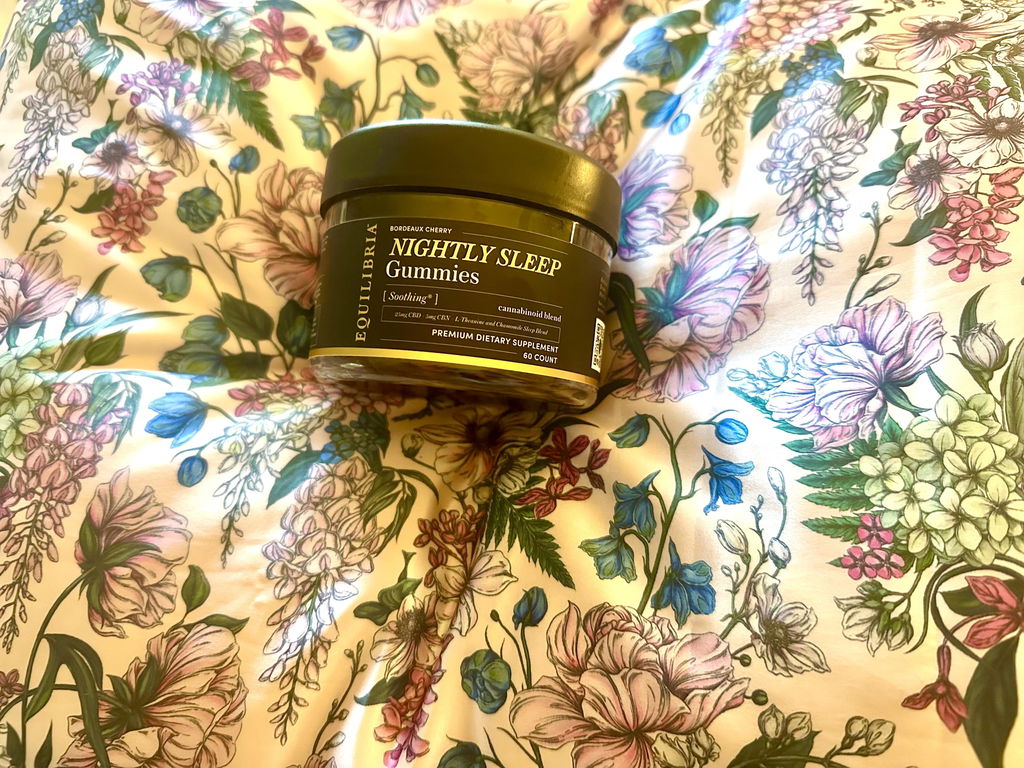
For sleep, evening dosing is more effective. Taking CBD an hour or two before bed — especially paired with a targeted sleep product like the Nightly Sleep Gummies — aligns the ECS support with your wind-down window.
Many members take CBD twice daily: a morning dose for daytime balance and an evening dose for sleep and overnight recovery. If you’re not sure what timing makes the most sense for your goals, Equilibria’s Certified Wellness Coaches can help you map out a routine that fits your life. Connect with a coach by booking a 1:1 complimentary dosage call.
How long until you notice a difference
Be patient — and be specific about what you’re watching for.
Some members notice subtle shifts within the first one to three weeks: slightly easier sleep onset, a little less reactive to stress, a sense of more steady energy. But the most significant and consistent results typically emerge after 60 to 90 days of daily use.
The mistake most people make is expecting CBD to feel like something every day. It often doesn’t. What it produces is a gradual recalibration of your baseline — not a sensation, but a change in how your days feel over time.
Track your baseline before you start. Sleep quality, stress reactivity, physical discomfort, mood steadiness. Check in against those benchmarks at 30, 60, and 90 days. That’s where the evidence lives.
Frequently Asked Questions
Q: Why does CBD work better when taken every day? A: CBD supports the endocannabinoid system (ECS), a regulatory network that governs stress response, mood, sleep, and more. With daily use, CBD builds up in the body and supports ongoing ECS tone — rather than providing a single-dose spike and drop. Most members who report the best results are those who have committed to a daily routine for at least 60 to 90 days.
Q: Can I just take CBD when I feel stressed or can't sleep, instead of every day? A: You can, and episodic products like the Rapid Calming Melts are designed for exactly that. But relying only on as-needed dosing means you’re working reactively rather than building the foundational ECS support that leads to the most consistent results. Daily baseline support plus as-needed products when stress spikes tends to outperform either approach alone.
Q: Will I build a tolerance to CBD if I take it every day? A: According to the World Health Organization, CBD is non-habit forming and does not produce tolerance the way many pharmaceutical or recreational substances do. You won’t need to continually increase your dose to maintain the same effect. Some members adjust their dose over time, but that’s typically dosage optimization, not a tolerance response.
Q: What’s the best time of day to take CBD daily? A: The best time depends on your goals. For stress and mood support, morning or early afternoon dosing is common so CBD is active during the highest-demand part of the day. For sleep, evening dosing is more effective. Many members take CBD twice daily — once in the morning and once at night. A Certified Wellness Coach can help you identify timing that aligns with your specific goals.
Q: How long until I notice a difference from taking CBD every day? A: Some members feel subtle shifts within the first one to three weeks — particularly in stress reactivity or sleep ease. The most significant and consistent results typically emerge after 60 to 90 days of daily use. CBD works through multiple pathways on a cellular level, some of which take time to express meaningful change. Patience and consistency are the most reliable predictors of success.